


How to Build a Job Portal Website: The Complete Development Guide for 2026
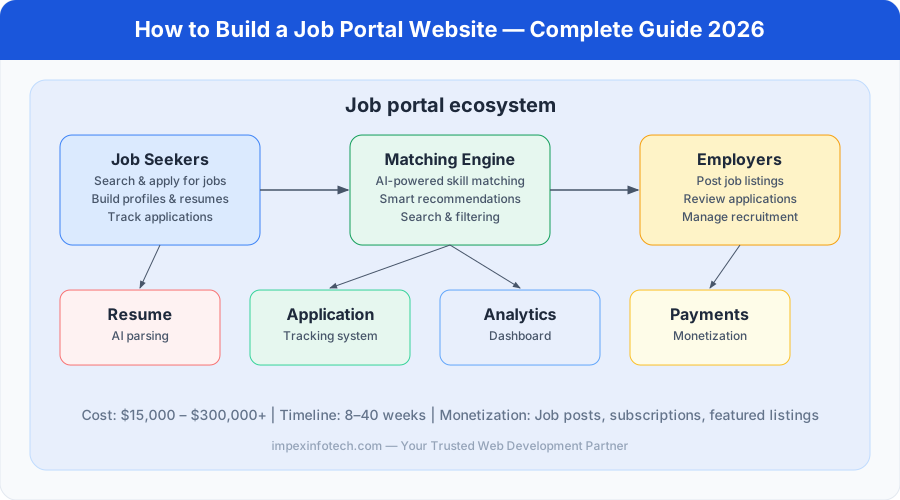
To build a job portal website, you need three core panels — job seeker (search, apply, profile), employer (post jobs, review applicants, manage hiring), and admin (moderation, analytics, monetization). Development costs range from $15,000 for a basic MVP to $300,000+ for an enterprise platform with AI matching. Build time is typically 8–40 weeks depending on feature complexity.
The online recruitment industry is booming. With businesses across the USA, Australia, and India competing fiercely for talent, job portals have become essential digital infrastructure for connecting employers with qualified candidates. Whether you are a startup founder planning to disrupt a niche hiring market, a staffing agency looking to build a proprietary platform, or an enterprise HR team needing a custom recruitment tool — understanding how to build a job portal from the ground up is the first step toward success.
At Impex Infotech, a leading website design company in Rajkot with clients across three continents, we have helped businesses build custom web applications including recruitment platforms, marketplace portals, and complex web-based dashboards. This guide shares everything we have learned about job portal development — from features and architecture to costs, AI integration, and monetization strategies.
What Is a Job Portal and Why Build One?
Job Portal: A web-based platform that connects job seekers with employers. Job seekers create profiles, upload resumes, search for openings, and apply for positions. Employers post job listings, search candidate databases, manage applications, and communicate with potential hires. An admin panel oversees the entire platform — managing users, content moderation, analytics, and monetization.
Unlike simple job boards that only list openings, modern job portals are full-featured recruitment ecosystems. They include applicant tracking, AI-powered candidate matching, resume parsing, communication tools, analytics dashboards, and multiple revenue streams. Think of platforms like Indeed, LinkedIn Jobs, Seek (Australia), or Naukri (India) — these are job portals at scale.
Building your own job portal makes sense when you need to serve a specific niche (healthcare, technology, blue-collar), control the candidate experience, own the data, and build long-term revenue through subscriptions and premium listings rather than paying per-job-post fees to third-party platforms.
Job Portal Market Opportunity in 2026
The global online recruitment market is on a strong growth trajectory. According to industry research, the market was valued at approximately $2.9 billion in 2021 and is projected to exceed $3.6 billion by 2026. Several macro trends are driving this growth:
- Remote work expansion: The permanent shift to hybrid and remote work has expanded the talent pool globally, increasing demand for digital recruitment platforms that can handle cross-border hiring.
- AI-driven recruitment: Employers increasingly expect intelligent candidate matching, automated resume screening, and predictive hiring analytics — features only available through purpose-built portals.
- Niche market demand: Generalist portals like Indeed serve the broad market, but specialized portals for healthcare, technology, construction, gig economy, and regional markets are growing faster because they solve industry-specific problems.
- Mobile-first job seeking: Over 70% of job seekers use smartphones to search and apply for jobs, making mobile-optimized portals a competitive requirement.
💡 The online recruitment market is growing at a CAGR of 37% in North America alone, driven by AI adoption and remote work infrastructure.
Types of Job Portals
| Type | Description | Examples | Best For |
|---|---|---|---|
| General Job Portal | All industries, all job types | Indeed, Monster | Maximum reach and volume |
| Niche/Industry Portal | Focused on specific sectors | Dice (tech), Health eCareers | Higher relevance and conversion |
| Freelance Marketplace | Project-based work | Upwork, Freelancer | Gig economy, contract work |
| Regional/Local Portal | Geo-specific job market | Seek (AU), Naukri (India) | Local market dominance |
| Internal Career Portal | Single company careers page | Google Careers, Apple Jobs | Employer branding and direct hiring |
| Staffing Agency Portal | Agency manages candidates | Robert Half, Randstad | B2B recruitment services |
Must-Have Features for Every Job Portal
Job Seeker Features
- User registration and profile builder: Sign up via email, Google, or LinkedIn. Build detailed profiles with work history, skills, education, certifications, and portfolio links.
- Resume upload and builder: Upload PDF/DOCX resumes or use an in-portal resume builder to create professional CVs.
- Advanced job search and filters: Search by keyword, location, salary range, job type (full-time, part-time, remote, contract), experience level, and industry.
- One-click apply: Apply to jobs instantly using saved profile and resume data — reduces application friction and increases conversions.
- Job alerts and notifications: Email, SMS, and push notifications for new jobs matching saved search criteria.
- Application tracking dashboard: View application status (applied, reviewed, shortlisted, rejected) in real time.
- Saved jobs and search history: Bookmark interesting listings and revisit recent searches.
Employer Features
- Company profile and branding page: Dedicated employer profiles with logo, description, culture info, photos, and current openings.
- Job posting and management: Create, edit, pause, and close job listings with rich text descriptions, salary ranges, and application requirements.
- Applicant tracking system (ATS): Review applications, shortlist candidates, schedule interviews, and move candidates through pipeline stages.
- Candidate search and database access: Search the job seeker database by skills, location, experience, and availability for proactive outreach.
- Communication tools: In-platform messaging, email templates, and interview scheduling integrated with calendar apps.
- Analytics and reporting: Track job post performance — views, applications, shortlist rate, time to fill, and cost per hire.
Admin Panel Features
- User management: Approve, suspend, or ban job seekers and employers. Manage user roles and permissions.
- Content moderation: Review and approve job postings, flag inappropriate content, and manage reported listings.
- Revenue management: Configure pricing plans, process payments, manage subscriptions, and generate financial reports.
- Platform analytics: Dashboard showing total users, active listings, applications, revenue, traffic sources, and engagement metrics.
- SEO and content management: Manage blog posts, landing pages, and meta data for organic search visibility.
The most common mistake in job portal development is building too many features at once. Start with a focused MVP — job posting, search, apply, and basic employer dashboard — then iterate based on real user feedback. The features that matter most are the ones your actual users request, not the ones you assume they need.
Step-by-Step Development Process
Building a job portal requires disciplined execution across seven phases. Here is the process that delivers reliable results:
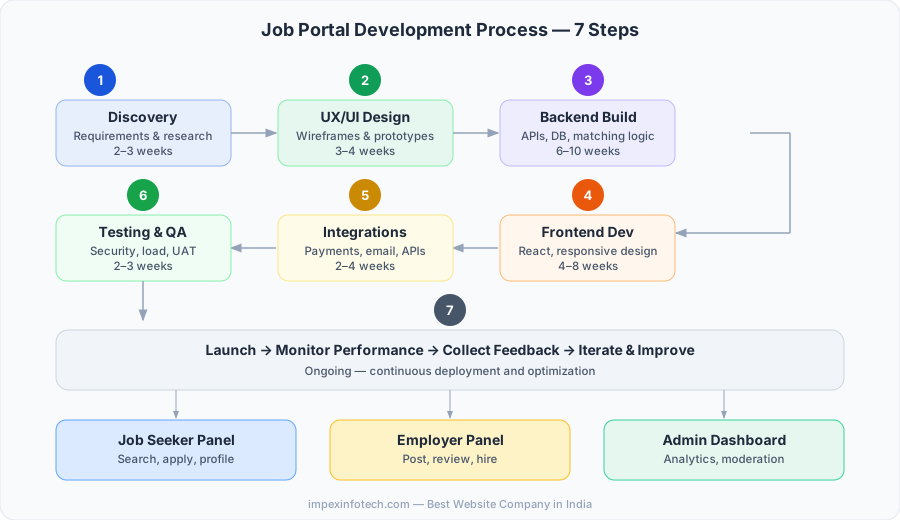
Discovery and Market Research
Define your target niche, analyze competitors (Indeed, Seek, Naukri), identify feature gaps, and document requirements for all three user roles. Research your target regions — job markets in the USA, Australia, and India each have unique expectations. This phase takes 2–3 weeks and produces your project scope document.
UX/UI Design
Design separate user flows for job seekers, employers, and admins. The job search experience must feel fast and intuitive — aim for under 3 clicks from landing page to applied. Create mobile-first wireframes and interactive prototypes, then validate with test users before development begins. Budget 3–4 weeks.
Backend Development
Build the core platform — user authentication, job posting engine, search and filtering logic, application management, and database architecture. Implement RESTful APIs that will connect the frontend, mobile apps, and third-party integrations. Design the database schema for users, jobs, applications, companies, and transactions. This is the longest phase at 6–10 weeks.
Frontend Development
Build responsive, mobile-first interfaces using React.js or Next.js. Create the job search page, listing detail pages, user dashboards, employer portal, and admin panel. Ensure fast page loads — slow portals lose candidates. Implement SEO-friendly routing so individual job listings rank in Google. Budget 4–8 weeks.
Integrations
Connect payment gateways (Stripe, Razorpay), email services (SendGrid, Amazon SES), SMS notifications (Twilio, MSG91), social login providers (Google, LinkedIn), and any third-party ATS or HR systems your clients use. Each integration adds 1–2 weeks.
Testing and QA
Test everything — search accuracy, application flow, payment processing, notification delivery, security vulnerabilities, and load capacity during traffic spikes (e.g., when a major employer posts a popular listing). Run cross-browser and cross-device testing. Budget 2–3 weeks.
Launch, Monitor, and Grow
Deploy with a soft launch to a limited user base, monitor performance metrics, fix issues, then expand. Set up analytics tracking (Google Analytics, Mixpanel), error monitoring (Sentry), and uptime alerts. Plan regular feature releases based on user feedback.
Recommended Technology Stack
| Layer | MVP / Startup | Enterprise Scale |
|---|---|---|
| Frontend | React.js, Next.js, Tailwind CSS | React + TypeScript, React Native (mobile) |
| Backend | Node.js (Express), PHP (Laravel) | Node.js (NestJS), Python (Django), Java Spring |
| Database | PostgreSQL, MongoDB | PostgreSQL + Elasticsearch + Redis |
| Search | PostgreSQL full-text search | Elasticsearch or Algolia |
| Cloud | AWS, DigitalOcean | AWS with auto-scaling, CloudFront CDN |
| Payments | Stripe, Razorpay | Stripe + PayPal + regional gateways |
| Notifications | SendGrid, Twilio | Amazon SES + Twilio + Firebase Push |
| AI/ML | OpenAI API for matching | Custom ML models + NLP resume parsing |
For job portals targeting India, integrate with Razorpay for payments and MSG91 for SMS — both are cost-effective and reliable. For Australia, ensure compliance with the Australian Privacy Act when handling candidate data. For the USA, comply with EEOC anti-discrimination requirements in job postings and candidate filtering.
AI-Powered Features That Set Your Portal Apart
In 2026, AI is no longer a nice-to-have — it is the differentiator between portals that feel modern and those that feel outdated. Here are the AI features worth investing in:
- AI resume parsing: Automatically extract skills, experience, education, and contact information from uploaded resumes in any format — saving job seekers time and improving data quality.
- Intelligent candidate matching: Machine learning algorithms that score and rank candidates for each job based on skills, experience, location preference, and historical hiring patterns.
- Smart job recommendations: Personalized job suggestions for seekers based on their profile, search history, application patterns, and similar users’ behavior.
- Automated screening questions: AI-generated screening questions tailored to each job listing, helping employers filter candidates before manual review.
- Chatbot for support: An AI-powered chatbot that answers common questions from both job seekers and employers, reducing support team workload.
- Predictive analytics: Forecast hiring trends, predict time-to-fill for different roles, and identify which job listings will receive the most applications.
How to Monetize a Job Portal
A sustainable job portal needs clear revenue streams. Here are the most proven monetization models:
| Revenue Model | How It Works | Typical Pricing |
|---|---|---|
| Pay-Per-Job-Post | Employers pay per listing | $50–$500 per post |
| Subscription Plans | Monthly/annual employer plans | $99–$999/month |
| Featured Listings | Premium placement for jobs | $25–$200 per boost |
| Resume Database Access | Employers pay to search candidates | $200–$1,000/month |
| Display Advertising | Banner ads on high-traffic pages | CPM-based pricing |
| Freemium Model | Free basic + paid premium features | Varies by tier |
The most successful job portals combine 2–3 revenue streams. For example, offer free basic job postings to attract employers (building supply), charge for featured listings and premium plans, and monetize the candidate database through recruiter subscriptions.
How Much Does It Cost to Build a Job Portal?
| Project Scope | Estimated Cost | Timeline | Includes |
|---|---|---|---|
| Basic MVP | $15,000 – $40,000 | 8–14 weeks | Core job posting, search, apply, basic dashboards |
| Mid-Range Platform | $40,000 – $100,000 | 14–24 weeks | ATS, payments, resume parsing, employer branding |
| Enterprise Portal | $100,000 – $300,000+ | 24–40 weeks | AI matching, mobile apps, analytics, multi-region |
| WordPress Job Board | $3,000 – $12,000 | 2–6 weeks | Theme + plugin setup (WP Job Manager) |
Annual maintenance costs typically run 15–20% of the initial build cost, covering hosting, security updates, bug fixes, and minor feature enhancements. Plan $40,000–$120,000 annually for new feature development if you want to stay competitive.
Common Challenges and How to Solve Them
- The chicken-and-egg problem: Employers want candidates; candidates want jobs. Solve this by focusing on one side first — seed the platform with job listings (even aggregated from external sources) to attract job seekers, then use the growing candidate base to attract employers.
- Search relevance: Poor search results drive users away fast. Invest in Elasticsearch or Algolia early and continuously tune your ranking algorithms based on click-through and application data.
- Spam and fake listings: Implement content moderation, employer verification, and automated fraud detection to maintain platform trust. Require employer email verification from company domains.
- SEO for job listings: Individual job pages must rank in Google. Use structured data (JobPosting schema), SEO-friendly URLs, proper meta tags, and fast page loads. Google for Jobs integration is essential.
- Scaling during traffic spikes: A viral job posting can spike traffic 10x overnight. Use auto-scaling infrastructure, CDN caching, and database read replicas to handle surges gracefully.
Best Practices for Building a Successful Job Portal
- Start niche, expand later. Target a specific industry or region before going broad. Niche portals convert better because they solve specific problems.
- Mobile-first design is mandatory. Over 70% of job seekers use mobile. If your portal does not work perfectly on smartphones, you lose the majority of your audience.
- Speed matters enormously. Job seekers are impatient. Pages must load in under 2 seconds. Use CDN, lazy loading, and server-side rendering.
- Implement JobPosting schema markup. Structured data enables your listings to appear in Google for Jobs — a massive free traffic source.
- Build SEO into the architecture. Every job listing needs a unique, crawlable URL with proper title tags, meta descriptions, and heading structure.
- Plan your data model carefully. The relationship between users, companies, jobs, applications, and messages is complex. Get the database schema right before building features on top of it.
- Collect feedback from day one. Talk to real job seekers and employers regularly. The features they request will be different from what you assumed.
At Impex Infotech, our web application development team builds custom portals and marketplace platforms using modern technologies like React, Node.js, Laravel, and WordPress — always starting with a clear understanding of the business model and user needs before writing code.
- A job portal needs three panels: job seeker, employer, and admin — each with distinct feature sets.
- Start with a niche-focused MVP before expanding to a general platform.
- AI-powered resume parsing and candidate matching are essential differentiators in 2026.
- Monetize through a mix of pay-per-post, subscriptions, featured listings, and database access.
- Development costs range from $15,000 (basic MVP) to $300,000+ (enterprise platform).
- Implement Google for Jobs schema markup to capture free organic traffic.
- Mobile-first design and sub-2-second page loads are non-negotiable for user retention.
- Solve the chicken-and-egg problem by seeding job listings before launching to employers.
Ready to Build Your Job Portal?
Impex Infotech develops custom web portals and recruitment platforms for businesses across the USA, Australia, and India. From WordPress job boards to full-scale AI-powered recruitment platforms — we build solutions that connect talent with opportunity.
Get a Free ConsultationFrequently Asked Questions
A basic job portal MVP takes 8–14 weeks. A mid-range platform with ATS and payment integration requires 14–24 weeks. Enterprise portals with AI matching, mobile apps, and multi-region support take 24–40 weeks. WordPress-based job boards can launch in 2–6 weeks using plugins like WP Job Manager.
A portal with Indeed-level functionality would cost $150,000–$300,000+ for the initial build, plus $100,000+ annually for AI features, scaling, and maintenance. However, you do not need to replicate Indeed from day one. A focused MVP targeting a specific niche can launch for $15,000–$40,000 and grow iteratively.
Yes. WordPress with plugins like WP Job Manager, Jeevo, or Jetifly can create functional job boards for $3,000–$12,000. This approach works well for small-to-medium job boards. For enterprise-scale portals with custom AI matching and high traffic, a custom-built solution using React and Node.js provides better performance and flexibility.
The most effective approach combines 2–3 revenue streams: employer subscription plans ($99–$999/month), pay-per-post fees ($50–$500), featured listing boosts, and resume database access for recruiters. Start with free job postings to build supply, then introduce paid features as the platform gains traction.
Initially, aggregate listings from free sources like government job feeds, RSS feeds from career pages, and partnerships with local employers. Offer free postings to attract early employers. Use Google for Jobs schema markup to capture organic traffic. As your candidate base grows, employers will pay for premium access.
For most portals, React.js or Next.js for the frontend, Node.js or Laravel for the backend, PostgreSQL for the database, and Elasticsearch for job search. Host on AWS or DigitalOcean. For AI features, integrate OpenAI APIs for resume parsing and candidate matching. Use Stripe for payments and SendGrid for notifications.
Implement JobPosting schema markup on every job listing page. Include required fields: title, description, datePosted, hiresOrganization, and jobLocation. Google crawls pages with valid schema and displays them in the Jobs search experience. This is one of the highest-ROI SEO investments for a job portal.
AI is not required for an MVP but is increasingly expected by both employers and job seekers. AI resume parsing saves manual data entry time, intelligent matching improves hire quality, and predictive analytics helps employers make better decisions. Start with basic keyword matching and add AI features as the platform matures.
References & Further Reading
- Google for Jobs Structured Data Documentation — Google Developers
- Bureau of Labor Statistics — U.S. Department of Labor
- Australian Privacy Act — Office of the Australian Information Commissioner
- Equal Employment Opportunity Commission — U.S. Federal Agency
Recent Posts
Metaverse Meaning in Simple Words: The Complete Guide for 2026
Metaverse Meaning in Simple Words: The Complete Guide for 2026 ⏱ 14 min read The metaverse is reshaping how we...
Read More
Best Code Fonts for Developers and Programmers in 2026: The Definitive Guide
Best Code Fonts for Developers and Programmers in 2026: The Definitive Guide ⏱ 12 min read The right coding font...
Read More
How to Build a Job Portal Website: The Complete Development Guide for 2026
How to Build a Job Portal Website: The Complete Development Guide for 2026 ⏱ 22 min read ⚡ Quick Answer...
Read MoreRecent Posts
Metaverse Meaning in Simple Words: The Complete Guide for 2026
Metaverse Meaning in Simple Words: The Complete Guide for 2026 ⏱ 14 min read The metaverse is reshaping how we...
Read More
Best Code Fonts for Developers and Programmers in 2026: The Definitive Guide
Best Code Fonts for Developers and Programmers in 2026: The Definitive Guide ⏱ 12 min read The right coding font...
Read More
How to Build a Job Portal Website: The Complete Development Guide for 2026
How to Build a Job Portal Website: The Complete Development Guide for 2026 ⏱ 22 min read ⚡ Quick Answer...
Read More