


Metaverse Meaning in Simple Words: The Complete Guide for 2026
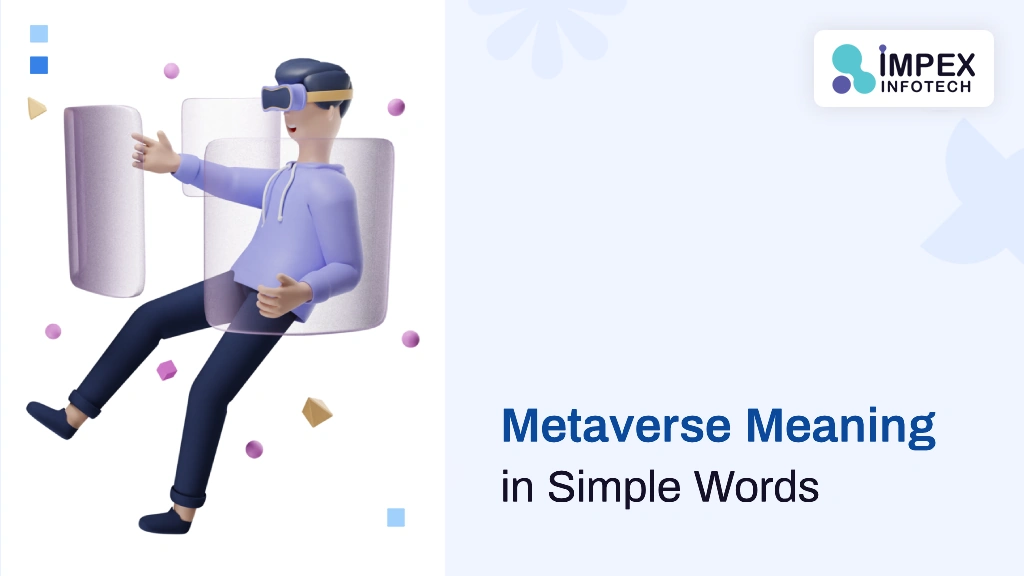
The metaverse is reshaping how we interact, work, and do business online. This guide explains the metaverse in plain language — what it is, how it works, the technologies behind it, real-world applications, business opportunities, challenges, and what the future holds.
The metaverse is a network of persistent, interconnected virtual worlds where people interact through digital avatars. It combines virtual reality (VR), augmented reality (AR), blockchain, and internet technologies to create immersive 3D spaces for socializing, working, gaming, shopping, and creating. Platforms like Roblox, Fortnite, and Meta Horizon Worlds represent early metaverse experiences.
📑 Table of Contents
What Is the Metaverse?
The metaverse is a collective term for interconnected, immersive virtual environments where users interact with each other and digital objects through avatars. Think of it as an evolution of the internet — instead of browsing flat web pages, you step inside three-dimensional digital spaces where you can walk, talk, build, buy, and experience things as if they were real.
The word “metaverse” was coined by author Neal Stephenson in his 1992 novel Snow Crash, describing a virtual reality successor to the internet. Today, the concept has moved from science fiction to active development by companies including Meta (formerly Facebook), Apple, Microsoft, Epic Games, and Roblox Corporation.
The metaverse is not a single product or platform. It is a vision of a fully connected network of virtual worlds — interoperable, persistent (they continue to exist even when you log off), and accessible through multiple devices from VR headsets to smartphones.
- If you’re searching for an IT company near me, Impex Infotech offers reliable web development, mobile apps, and digital marketing services tailored to your business needs.
- As a leading website design company near me, Impex Infotech specializes in creating responsive, SEO-optimized websites that help businesses grow online.
- Learn more about technical topics like font formats in this guide: Font File Types Explained, and enhance your website performance with expert insights.
How the Metaverse Works
In the metaverse, users create digital representations of themselves called avatars. These avatars move through virtual spaces — from social hubs and virtual offices to game worlds and shopping districts. Interactions happen in real-time: you can talk to other users, attend events, buy virtual goods, and collaborate on projects, all within a 3D environment.
Unlike traditional video calls or websites, the metaverse creates a sense of presence — the feeling of actually being somewhere with other people. This is achieved through spatial audio, 3D rendering, motion tracking, and haptic feedback (in advanced setups).
Technologies Powering the Metaverse
| Technology | Role in the Metaverse | Current State |
|---|---|---|
| Virtual Reality (VR) | Fully immersive 3D environments via headsets | Meta Quest 3, Apple Vision Pro, PSVR2 |
| Augmented Reality (AR) | Overlays digital elements on real world | Apple Vision Pro, smartphone AR apps |
| Blockchain | Digital ownership, transactions, identity | Ethereum, Solana, Polygon for metaverse assets |
| AI | NPCs, content generation, personalization | AI-driven avatars and world building |
| Cloud Computing | Rendering, storage, real-time processing | AWS, Azure, Google Cloud infrastructure |
| 5G / Edge Computing | Low-latency streaming for real-time interaction | Expanding global coverage |
| Spatial Computing | Understanding and interacting with 3D space | Apple Vision Pro’s core technology |
Metaverse vs the Internet: What Is Different?
| Aspect | Internet (Web 2.0) | Metaverse |
|---|---|---|
| Experience | 2D screens, text, images, video | 3D immersive, spatial environments |
| Interaction | Click, type, scroll | Walk, gesture, speak, manipulate objects |
| Presence | Low (text/video calls) | High (avatar-based, spatial audio) |
| Ownership | Platform-controlled (accounts, content) | User-owned digital assets (NFTs, crypto) |
| Persistence | Pages load on request | Virtual worlds exist continuously |
Current Metaverse Platforms
- Roblox: 70M+ daily users. User-created games and experiences. Popular with younger audiences.
- Fortnite: Beyond gaming — virtual concerts, brand events, social spaces.
- Meta Horizon Worlds: Meta’s VR social platform for socializing and building.
- Decentraland: Blockchain-based virtual world with user-owned land (NFTs).
- The Sandbox: Voxel-based world with creator economy and brand partnerships.
- VRChat: Social VR platform with user-created avatars and worlds.
- Apple Vision Pro ecosystem: Spatial computing experiences blending AR and VR.
Business Applications of the Metaverse
- Virtual showrooms: Automotive, fashion, and real estate companies offer immersive product experiences.
- Remote collaboration: Virtual offices and meeting spaces that feel more engaging than video calls.
- Training and simulation: Medical, military, and industrial training in safe virtual environments.
- Virtual events: Conferences, concerts, and product launches reaching global audiences.
- E-commerce: Virtual stores where customers browse and try products in 3D.
- Marketing: Brand activations, sponsored virtual experiences, and digital collectibles.
At Impex Infotech, we help businesses explore metaverse and immersive web opportunities — from WebXR experiences to 3D product configurators and virtual showrooms. As web technologies evolve toward spatial computing, businesses that start experimenting now will have a significant advantage.
NFTs and Digital Ownership in the Metaverse
NFTs (Non-Fungible Tokens) are blockchain-verified unique digital assets. In the metaverse, NFTs represent ownership of virtual items — land, avatar clothing, art, collectibles, and in-game assets. They enable a digital economy where virtual goods have verifiable scarcity, transferability, and real monetary value.
While the NFT market has fluctuated since its 2021–2022 peak, the underlying concept of blockchain-based digital ownership remains foundational to metaverse economics. As platforms mature, expect more utility-focused NFTs tied to real experiences rather than speculative art trading.
Challenges and Criticisms
- Privacy and data security: VR/AR devices collect biometric data (eye tracking, movement patterns). Protecting this data is a major concern.
- Accessibility: High-end VR headsets remain expensive, creating barriers to entry.
- Harassment and safety: Virtual spaces face challenges with moderation, harassment, and protecting minors.
- Interoperability: Current platforms are siloed — your Fortnite avatar cannot visit Decentraland.
- Environmental impact: Blockchain-based metaverse operations can have significant energy footprints.
- Hype vs reality: Many metaverse promises remain aspirational. Real adoption lags behind marketing.
The Future of the Metaverse
The metaverse is not a finished product — it is an evolving vision. Key developments to watch include Apple’s spatial computing ecosystem (Vision Pro), AI-generated virtual worlds, improved VR/AR hardware (lighter, cheaper, more powerful), cross-platform interoperability standards, and enterprise adoption for remote work and training.
While the fully realized metaverse — a seamless, interconnected virtual universe — is likely years away, the building blocks are being assembled now. Businesses and developers who understand these technologies will be best positioned to capitalize on the opportunities as they emerge.
🔑 Key Takeaways
- The metaverse is a network of immersive, persistent virtual worlds accessed through VR, AR, and standard devices.
- Key technologies: VR, AR, blockchain, AI, cloud computing, 5G, and spatial computing.
- Current platforms (Roblox, Fortnite, Decentraland, VRChat) represent early-stage metaverse experiences.
- Business applications include virtual showrooms, remote collaboration, training, events, and e-commerce.
- Challenges include privacy, accessibility, safety, interoperability, and distinguishing hype from reality.
- The metaverse is evolving — businesses should experiment now to gain early-mover advantage.
Ready to Build Immersive Digital Experiences?
Impex Infotech builds modern web applications, 3D product experiences, and interactive digital platforms.
Explore Possibilities →Frequently Asked Questions
A network of interconnected, immersive virtual worlds where people socialize, work, play, and shop using digital avatars. It combines VR, AR, and internet technologies.
Early versions exist (Roblox, Fortnite, Decentraland). A fully connected, universal metaverse does not yet exist.
Through VR headsets (Meta Quest, Apple Vision Pro), AR devices, gaming consoles, or regular computers and smartphones.
No. VR is one access technology. The metaverse is a broader concept including VR, AR, blockchain, digital economies, and persistent virtual worlds.
Virtual showrooms, remote collaboration, training, events, e-commerce, and immersive marketing.
VR, AR, blockchain, AI, cloud computing, 5G, and spatial computing.
Blockchain-verified unique digital assets representing ownership of virtual items like land, clothing, and art.
Challenges include privacy, harassment, data security, and protecting minors. Regulation is still evolving.
Recent Posts
Metaverse Meaning in Simple Words: The Complete Guide for 2026
Metaverse Meaning in Simple Words: The Complete Guide for 2026 ⏱ 14 min read The metaverse is reshaping how we...
Read More
Best Code Fonts for Developers and Programmers in 2026: The Definitive Guide
Best Code Fonts for Developers and Programmers in 2026: The Definitive Guide ⏱ 12 min read The right coding font...
Read More
How to Build a Job Portal Website: The Complete Development Guide for 2026
How to Build a Job Portal Website: The Complete Development Guide for 2026 ⏱ 22 min read ⚡ Quick Answer...
Read MoreRecent Posts
Metaverse Meaning in Simple Words: The Complete Guide for 2026
Metaverse Meaning in Simple Words: The Complete Guide for 2026 ⏱ 14 min read The metaverse is reshaping how we...
Read More
Best Code Fonts for Developers and Programmers in 2026: The Definitive Guide
Best Code Fonts for Developers and Programmers in 2026: The Definitive Guide ⏱ 12 min read The right coding font...
Read More
How to Build a Job Portal Website: The Complete Development Guide for 2026
How to Build a Job Portal Website: The Complete Development Guide for 2026 ⏱ 22 min read ⚡ Quick Answer...
Read More