


How Do Free Apps Make Money in 2026? 13 Proven Strategies (With Real Revenue Data)

⚡ Quick Answer
Free apps make money through 13 primary monetization strategies: in-app advertising, subscriptions, in-app purchases, freemium upsell, affiliate marketing, sponsorship, transaction fees, selling merchandise, data licensing, crowdfunding, Web3/token rewards, AI-powered personalisation, and API/SaaS licensing. In 2026, the global mobile app market is projected to exceed USD $613 billion, with over 96% of apps on Google Play being free. The most profitable apps combine 3–4 models — for example, Spotify uses subscriptions + ads, while Candy Crush blends in-app purchases + rewarded video ads.
🎯 Key Takeaways
- Over 96.7% of apps on Google Play are free in 2026, yet they generate the majority of global app revenue.
- The most profitable free apps combine 3–4 monetization models (hybrid strategy) rather than relying on one.
- Subscriptions are the fastest-growing model — up 28% year-over-year globally.
- Rewarded video ads deliver the highest eCPM, especially in India and Southeast Asia.
- Privacy compliance (GDPR, India’s DPDP Act, Australia’s Privacy Act 2023, CCPA) is non-negotiable in 2026.
- Start with one dominant model, measure, then layer in complementary streams.
Free Apps vs Paid Apps: The 2026 Market Reality
The mobile app economy has never been larger. According to Statista, global consumer spending on mobile apps is projected to surpass USD $613 billion in 2026, with the industry heading toward $777 billion by 2032. And here’s the surprising part — the bulk of that revenue is generated by apps that cost users nothing to download.
As of Q1 2026, 96.7% of Android apps and 93.4% of iOS apps are free. So how do these “free” apps bankroll billion-dollar valuations? The answer lies in smart, layered monetization.
13 Proven Ways Free Apps Make Money in 2026
Below are the 13 most effective monetization strategies used by free apps today — ranked from most to least common — with real-world examples relevant to startups and enterprises in India, Australia, and the United States.
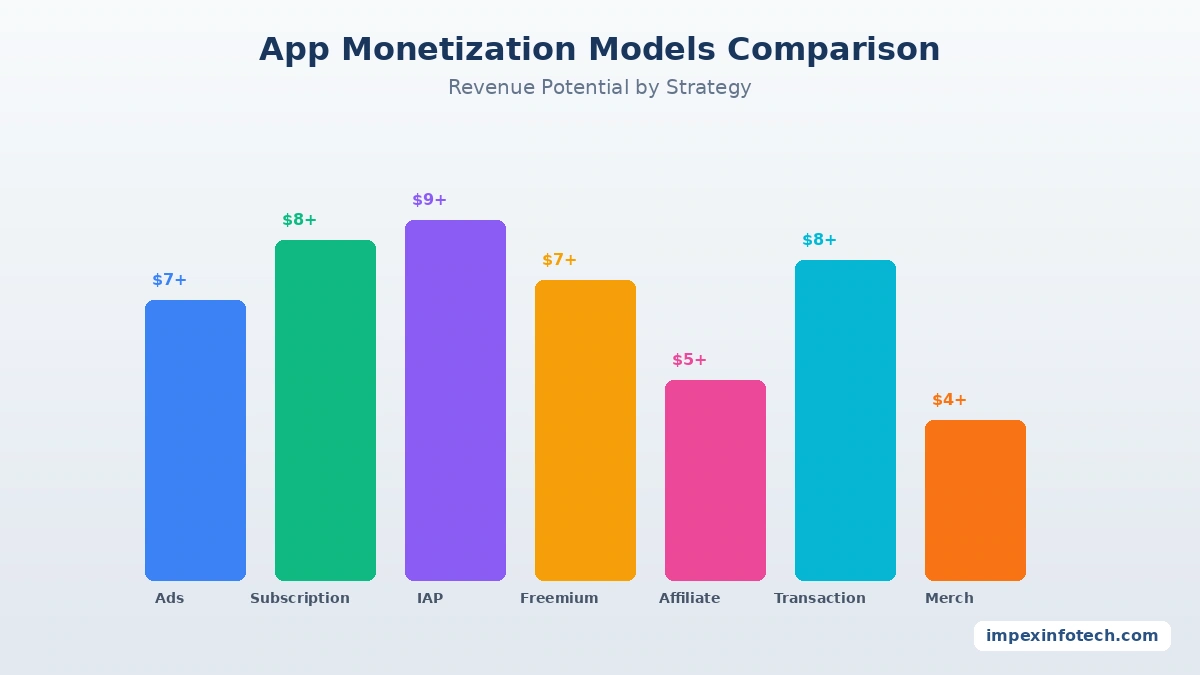
| # | Strategy | Best For | Top Examples | Revenue Potential |
|---|---|---|---|---|
| 1 | In-App Advertising | High-DAU apps | Instagram, TikTok | $0.10–$10 eCPM |
| 2 | Subscription | Content / SaaS | Netflix, Spotify | High LTV |
| 3 | In-App Purchases | Games, Utilities | Clash Royale, Tinder | Very High |
| 4 | Freemium Upsell | Productivity / SaaS | Dropbox, Canva | High |
| 5 | Affiliate Marketing | Content / Review apps | Honey, Airbnb | Medium |
| 6 | Sponsorship | Niche community apps | Strava, Weather Channel | Medium–High |
| 7 | Transaction Fees | Marketplaces, Fintech | Uber, PayPal, PhonePe | Very High |
| 8 | Merchandise | Brands / Games | Angry Birds, Amazon | Medium |
| 9 | Data Licensing | Research / B2B | Foursquare (ethical) | Medium |
| 10 | Crowdfunding | Early-stage startups | Kickstarter-backed apps | One-time |
| 11 | Web3 / Tokens | Gaming, DeFi | Axie Infinity, STEPN | Variable |
| 12 | AI Personalisation | Content, eCom | ChatGPT, Perplexity | Fast-growing |
| 13 | API / SaaS Licensing | B2B tools | Stripe, Twilio | Very High |
1. In-App Advertising — The #1 Revenue Stream
In-app advertising remains the most widely used monetization model in 2026. Publishers partner with ad networks like Google AdMob, Meta Audience Network, Unity Ads, AppLovin, and IronSource to display ads within their apps. Global mobile ad spending is forecast to reach USD $430+ billion in 2026.
Main ad formats:
- Banner ads — small, persistent, low-intrusion. eCPM: $0.10–$1.00.
- Interstitial ads — full-screen, shown between app states. eCPM: $3–$10.
- Rewarded video ads — users watch in exchange for rewards. Highest eCPM in gaming ($10–$25).
- Native ads — blend with app UI. Best user experience.
- Playable ads — mini-demos of other apps. Top-performing in 2026.
2. Subscription Model
Subscriptions have become the fastest-growing revenue model. Apple now offers an 85/15 revenue split for subscriptions retained beyond 12 months (versus the standard 70/30), strongly incentivising this approach. Subscription apps generated over $45 billion globally in 2025, a 28% year-over-year jump.
Top subscription apps: Netflix, Spotify, Hotstar (India), Stan (Australia), Tinder Gold, Duolingo Super, Headspace, Calm, and YouTube Premium. Building a subscription iOS app? Explore our iPhone Application Development services.
3. In-App Purchases (IAP)
In-app purchases let users buy digital goods — virtual currency, characters, lives, premium features — directly within the app. Gaming dominates this category: Clash of Clans, PUBG Mobile, Free Fire, and Genshin Impact together generated over $8 billion in IAP revenue in 2025.
4. Freemium Upsell Model
Users download the app for free and access core features, but must pay to unlock advanced capabilities. This is the default for SaaS-style apps like Dropbox, Canva, LinkedIn, Evernote, and Grammarly. Typical free-to-paid conversion rates range from 2%–5%. The same model works beautifully for web platforms — see our Web Application Development services.
Expert Insight from Impex Infotech
At Impex Infotech, we’ve helped clients across India, Australia, and the USA launch 100+ mobile apps. Our experience shows freemium works best when your free tier is genuinely useful but your paid tier solves a painful bottleneck. Free users who hit a limit convert at 4–6× the rate of users offered optional upgrades.
5. Affiliate & Referral Marketing
Apps earn commissions by promoting third-party products or services. Models include CPA (Cost Per Acquisition), CPC (Cost Per Click), CPI (Cost Per Install), and CPV (Cost Per View). Popular networks: Amazon Associates, Impact, ShareASale, CJ Affiliate, and Commission Factory (Australia).
6. Brand Sponsorship Deals
Niche apps with loyal, targeted audiences can attract direct brand sponsorships. The Weather Channel’s sponsorship with Home Depot is a classic example. Fitness app Strava partners with Wahoo, Garmin, and Specialized globally.
7. Transaction Fees
Marketplaces, fintech apps, and gig-economy platforms charge a small fee per transaction. Examples: PhonePe and Paytm (India), Afterpay and PayID (Australia), Venmo and Cash App (USA), Uber, DoorDash, and Airbnb globally. Typical fees: 1%–15% per transaction.
8. Selling Physical Merchandise
Popular for game brands and creator communities. Angry Birds reportedly sells 1M+ branded items per month. YouTube Shopping and TikTok Shop are making merchandise-as-a-revenue stream accessible to smaller apps. Considering an eCommerce angle? Our Shopify Development team can help you build a merchandise storefront.
9. Ethical Data Licensing
Aggregated, anonymised user data can be licensed to researchers and brands — but only with explicit user consent and strict compliance with GDPR, India’s DPDP Act 2023, Australia’s Privacy Act 2023 reforms, and the US CCPA. Transparency is non-negotiable.
10. Crowdfunding
Platforms like Kickstarter, Indiegogo, Ketto (India), and Chuffed (Australia) let app creators raise pre-launch capital. Best for mission-driven or community apps.
11. Web3, Tokens & Play-to-Earn (NEW 2026)
Blockchain-based apps reward users with crypto tokens or NFTs — a model popularised by Axie Infinity and STEPN. While volatile, Web3 monetization is gaining traction in gaming, fitness, and social apps, especially among Gen Z users in the US and Southeast Asia.
12. AI-Powered Personalisation (NEW 2026)
AI-first apps like ChatGPT, Perplexity, and Claude monetize through tiered AI access — free users get limited queries or slower models, while paid users access premium AI engines. This is the fastest-growing monetization category of 2026.
13. API & White-Label SaaS Licensing
Apps can license their backend, AI models, or APIs to other businesses. Stripe, Twilio, and Razorpay (India) built billion-dollar businesses this way. Perfect for B2B-leaning apps.
The Hybrid Monetization Blueprint
The apps that dominate 2026 app charts don’t rely on a single revenue stream. They combine multiple models based on user segment, lifecycle stage, and engagement level.
| App | Primary Model | Secondary Model | Tertiary Model |
|---|---|---|---|
| Spotify | Subscription | Advertising | Affiliate (concert tickets) |
| TikTok | Advertising | TikTok Shop | Creator tips / gifts |
| Uber | Transaction fees | Uber One subscription | Advertising (in-app) |
| Duolingo | Subscription (Super) | Advertising | Duolingo English Test |
| Candy Crush | In-app purchases | Rewarded video ads | Merchandise |
App Monetization Decision Matrix
Not sure which model suits your app? Use this framework:
| App Type | Best Primary Model | Good Secondary Model |
|---|---|---|
| Casual / Hyper-casual Game | Rewarded video ads | In-app purchases |
| Core / Midcore Game | In-app purchases | Battle Pass subscription |
| Productivity / SaaS | Freemium subscription | Team/enterprise plans |
| Content / News | Subscription | Advertising |
| Marketplace / Fintech | Transaction fees | Premium seller tools |
| Social / Community | Advertising | Creator monetization |
| Health / Fitness | Subscription | Affiliate (gear, supplements) |
| Education / EdTech | Freemium + Subscription | Certification fees |
Regional Insights: India · Australia · USA
🇮🇳 India
India is the world’s largest app download market, but ARPU remains lower than the West. Rewarded video ads, UPI-powered microtransactions, and local-language subscriptions (Hotstar, JioSaavn, ShareChat) dominate. Apps targeting Tier 2/3 cities should offer flexible weekly or monthly subscriptions as low as ₹29–₹99. For local SEO visibility, our SEO Services help apps rank in regional markets.
🇦🇺 Australia
Australian users have high ARPU and strong subscription appetite (Stan, Kayo, Binge). Fintech apps (Afterpay, CommBank, Up) thrive on transaction fees. GDPR-equivalent privacy laws (Privacy Act 2023 reforms) demand transparent data practices. Launching an app in Sydney, Melbourne, or Brisbane? See our Australia-focused web & app services.
🇺🇸 USA
The US remains the highest-eCPM market globally. Subscription, IAP, and ad revenue are all viable. Apple’s App Tracking Transparency (ATT) has made contextual advertising and first-party data strategies more valuable than ever.
Privacy & Compliance in 2026
Monetization without compliance is a liability waiting to happen. Ensure your app aligns with:
- GDPR (EU users)
- India’s Digital Personal Data Protection (DPDP) Act 2023
- Australia’s Privacy Act 1988 with 2023 reforms
- USA’s CCPA / CPRA and state-level laws
- Apple’s App Tracking Transparency and Google’s Privacy Sandbox
🚀 Ready to Build an App That Makes Money?
Impex Infotech has helped businesses across India, Australia, and the USA design, develop, and monetize successful mobile apps. Get a free consultation today.
Get a Free Quote →Frequently Asked Questions
How do free apps make money?
Free apps make money after the download through in-app advertising, in-app purchases, subscriptions, freemium upgrades, affiliate commissions and sponsorships. Over 95% of apps on the App Store and Google Play are free, and the top earners combine two or three of these models rather than relying on one.
How do free apps make money without ads?
Free apps without ads earn from subscriptions, in-app purchases, freemium upgrades, affiliate commissions, sponsorships and transaction fees. Subscriptions are the strongest ad-free model because revenue recurs every month and grows with user retention.
How much money can a free app make from ads?
Ad income depends on daily active users, not downloads, because advertisers pay per thousand impressions. Rewarded video pays the most per impression and banners pay the least, with the highest rates in the US. Ad-only apps need large, sustained usage to be profitable, which is why most pair ads with a paid tier.
What is the most profitable way to monetise a free app?
Subscriptions and in-app purchases are the most profitable models. Free apps with in-app purchases or subscriptions capture nearly all mobile app revenue, while paid-upfront apps earn under 1%. Hybrid apps that add ads for non-paying users earn the most per install.
Do free apps sell user data?
Some do. Apps can use data on location, interests and behaviour to target ads, or license anonymised data to third parties for market research. Privacy rules such as GDPR and Apple’s App Tracking Transparency require consent, so data is now a minor revenue source compared with ads and subscriptions.
How many downloads does a free app need to make money?
There is no fixed number, because revenue comes from active users rather than installs. Average 30-day retention is about 27%, so 100,000 downloads may leave only a fraction as regular users. A subscription app can be profitable with a few thousand paying users; an ad-only app usually needs hundreds of thousands of active users.
What is the freemium model for apps?
Freemium means the app is free to download and use, with premium features, extra content or an ad-free experience behind a one-time purchase or subscription. Typically only a small share of users pay, around 5%, so the free version must be good enough to attract a large audience.
📚 References
- Statista – Mobile App Market Worldwide – statista.com
- Allied Market Research – Mobile Application Market Report – alliedmarketresearch.com
- Government of India – Digital Personal Data Protection Act 2023 – meity.gov.in
- Office of the Australian Information Commissioner – Privacy Act Review – oaic.gov.au
- Apple Developer – App Store Subscriptions & Pricing – developer.apple.com
- Google AdMob – Monetization Best Practices – admob.google.com
Recent Posts
Spring Boot Annotations List With Examples
Spring Boot Annotations: The Complete 2026 Guide With Examples (and How AI Helps You Use Them Correctly) ⏱ 24 min...
Read More
Inventory Management Software Solutions Small Business
Best Inventory Management Software Solutions for Small Business in 2026: Pricing, Features and When to Go Custom (USA & India)...
Read More
Amazon Web Hosting AWS Cloud Computing
Amazon Web Hosting (AWS) in 2026: How Cloud Hosting Works, What It Really Costs and How to Host Your Website...
Read MoreRecent Posts
Spring Boot Annotations List With Examples
Spring Boot Annotations: The Complete 2026 Guide With Examples (and How AI Helps You Use Them Correctly) ⏱ 24 min...
Read More
Inventory Management Software Solutions Small Business
Best Inventory Management Software Solutions for Small Business in 2026: Pricing, Features and When to Go Custom (USA & India)...
Read More
Amazon Web Hosting AWS Cloud Computing
Amazon Web Hosting (AWS) in 2026: How Cloud Hosting Works, What It Really Costs and How to Host Your Website...
Read More